Transforming Your Garden with Light
Transforming Your Garden with Light

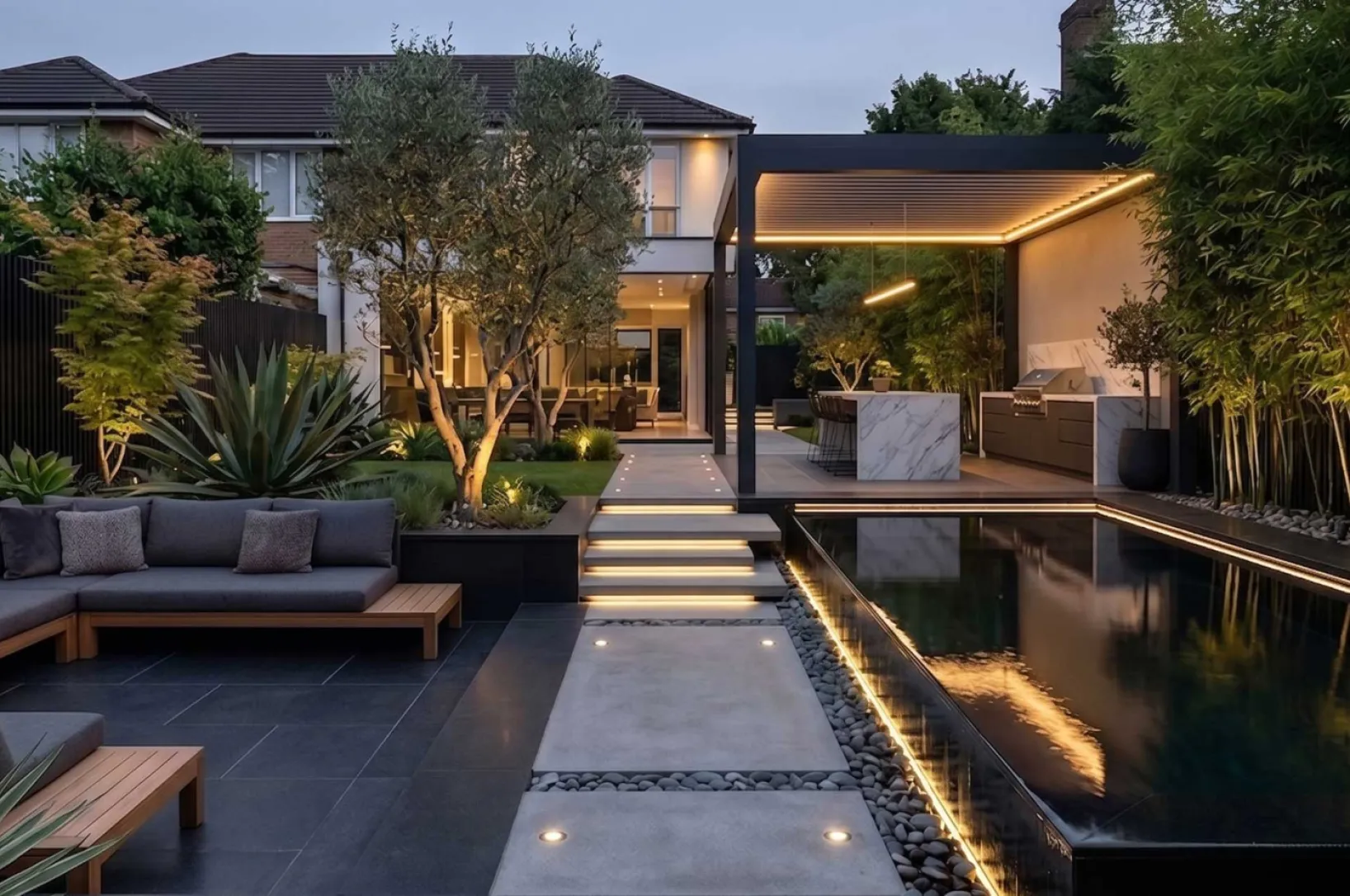
Outdoor lighting changes how your home feels at night - adding warmth, visibility, and atmosphere to the spaces around you.

It’s not about lighting everything. It’s about placing light thoughtfully - highlighting key features, guiding movement, and creating a sense of depth.

This guide will help you design an outdoor lighting approach that feels balanced, comfortable, and naturally connected to your home.

 

More than lights.jpg


Planning your garden lighting

Before placing any lighting, think about how you want your outdoor space to feel and how it’s used after dark.

Identify key features
Look for elements worth highlighting - trees, planting, architectural details, or pathways.
 
Layer your lighting
Combining different light sources helps create depth, balance, and a more considered outdoor space.
 
Control light direction
Position lighting carefully to reduce glare and keep the focus on the landscape rather than the light source.
 
Keep it subtle
Less light often creates a more inviting result. Lower, well-placed lighting helps maintain atmosphere and depth.
 

Creating depth and contrast

Using light in different ways can help shape your garden, adding contrast, depth, and visual interest.
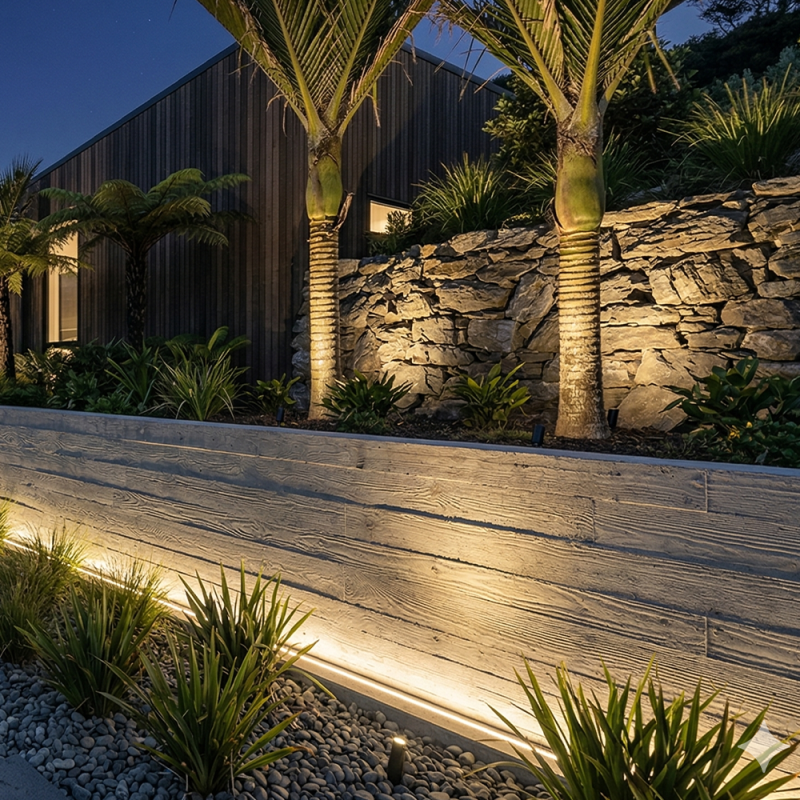
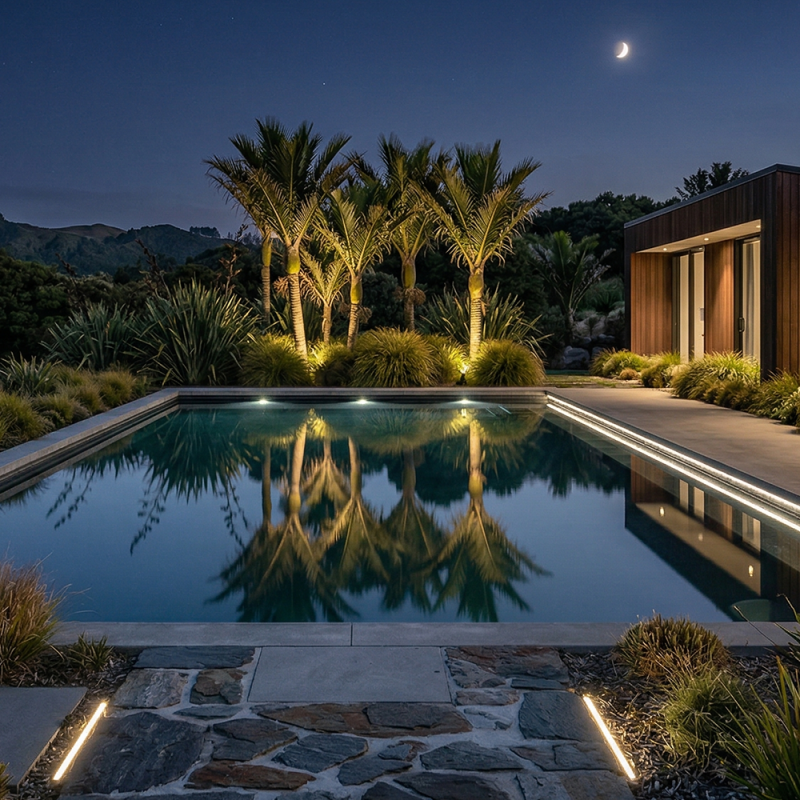
Grazing
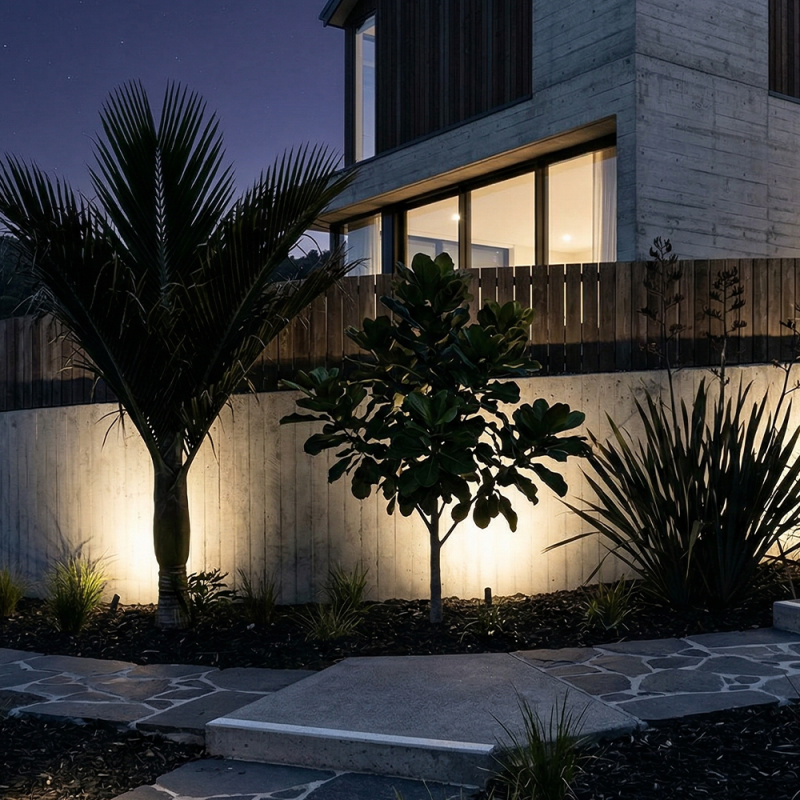
Position lighting at a low angle across a surface to bring out texture in materials like stone, timber, or planting.
Mirroring
Position lighting near reflective surfaces such as water to create symmetry and enhance the sense of space.
Moonlighting
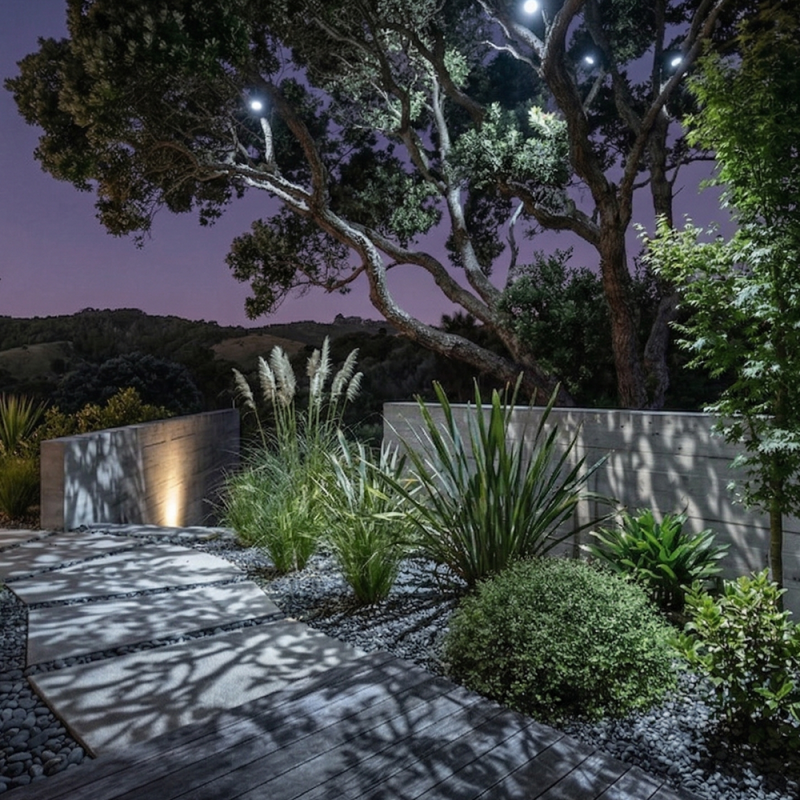
Placing lights higher up can create a softer, more natural effect, similar to moonlight filtering through trees.
Silhouetting
Lighting from behind can highlight the outline of plants or structures, adding contrast and definition.
Shadowing
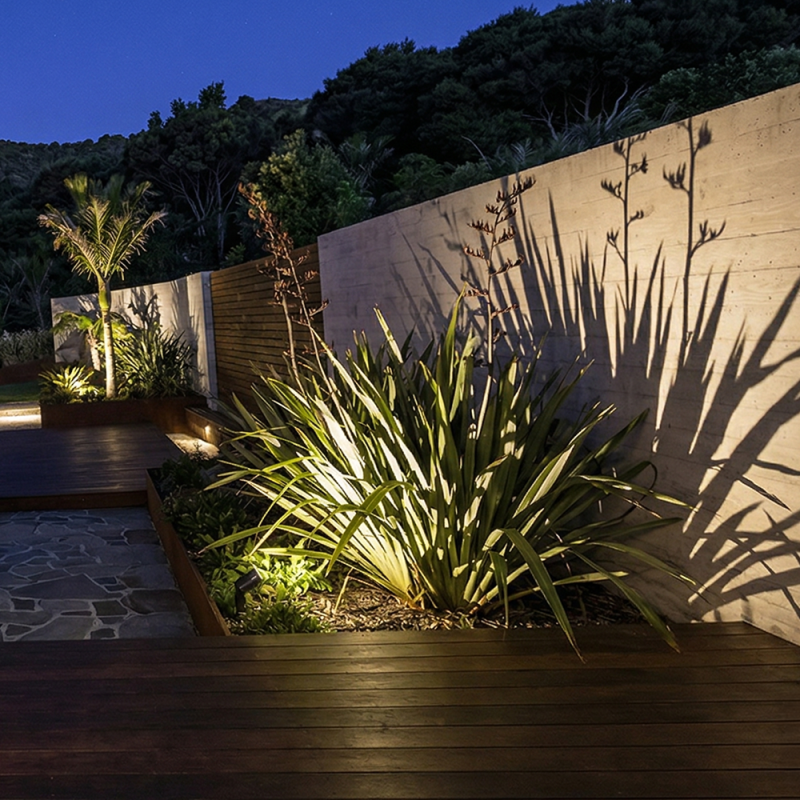
Placing light in front of planting can project layered shadows onto nearby surfaces, creating depth and movement.

Technical considerations

A well-designed outdoor lighting system should be reliable, safe, and built to perform in all conditions.

The 12V advantage
Ensure your dimmer is rated for the total wattage of your lighting to avoid performance issues.
 
Safety first
Low-voltage lighting is well suited to outdoor environments and safe for households with children and pets.
 
Built for outdoors
Weather-resistant fittings and watertight connections help ensure long-term durability.
 
Plan your layout
Keeping cable runs efficient helps maintain consistent brightness across your lighting setup.
 
Allow for capacity
As a guide, aim to use no more than 80% of your transformer’s capacity for optimal performance.
 

Choosing the right fixtures

The right combination of fixtures helps bring your outdoor lighting plan to life.
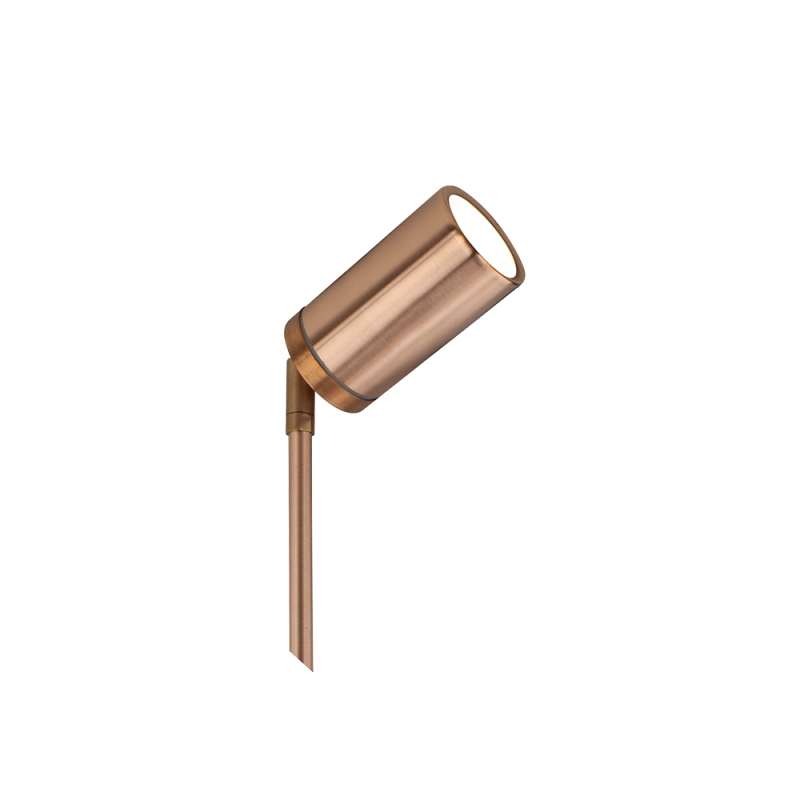
Spike spotlights
Ideal for highlighting trees, planting, and architectural features.

Gavel 74733

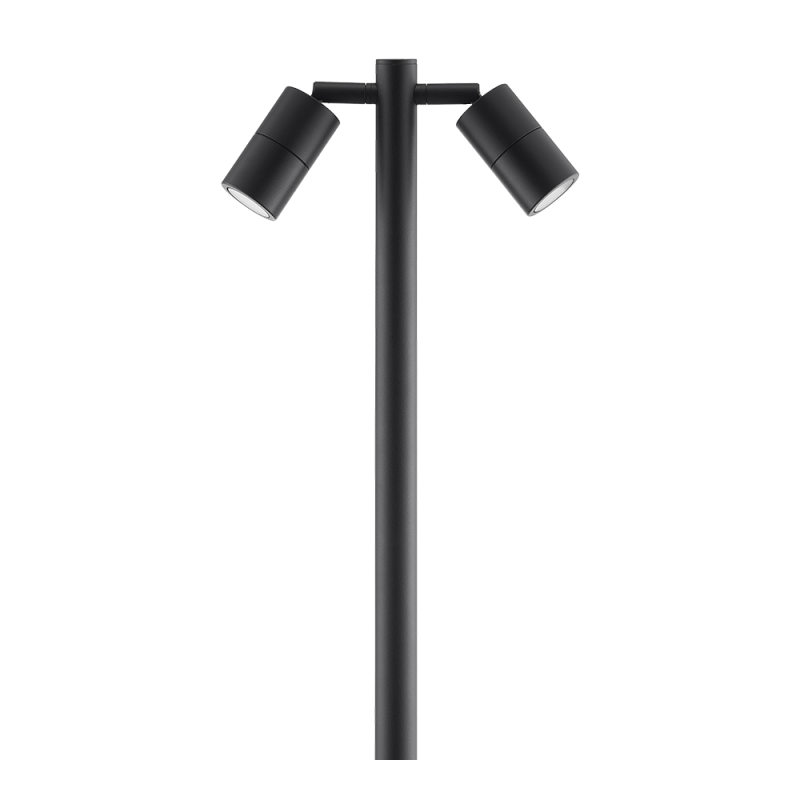
Twin spotlights
Allow you to direct light across multiple areas from a single fitting.

Gavel 74915

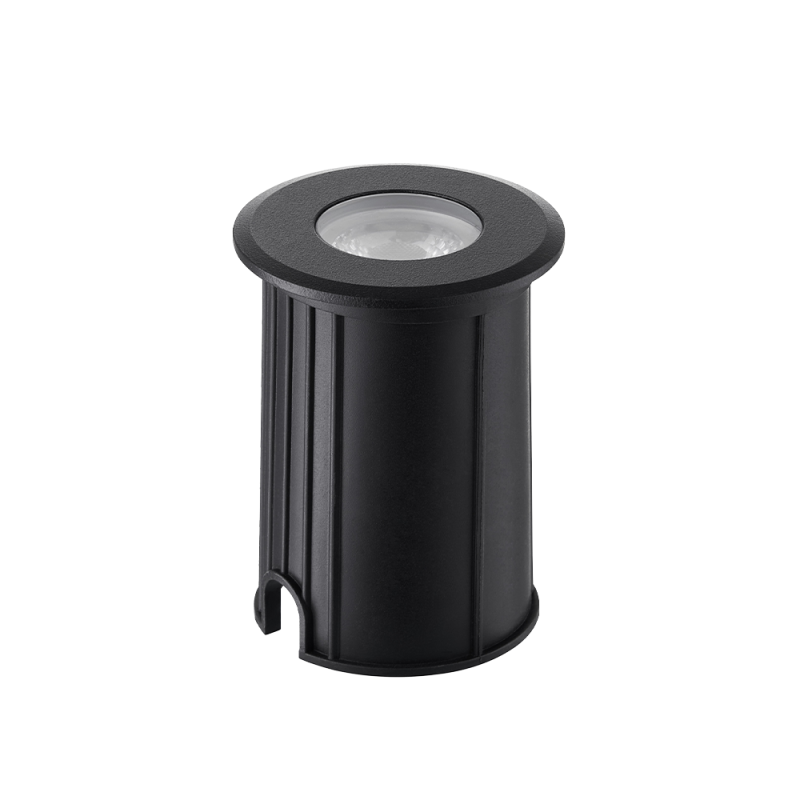
Inground uplights
Used to light walls, trees, and structures from below, helping reduce dark areas.

Acima 77303

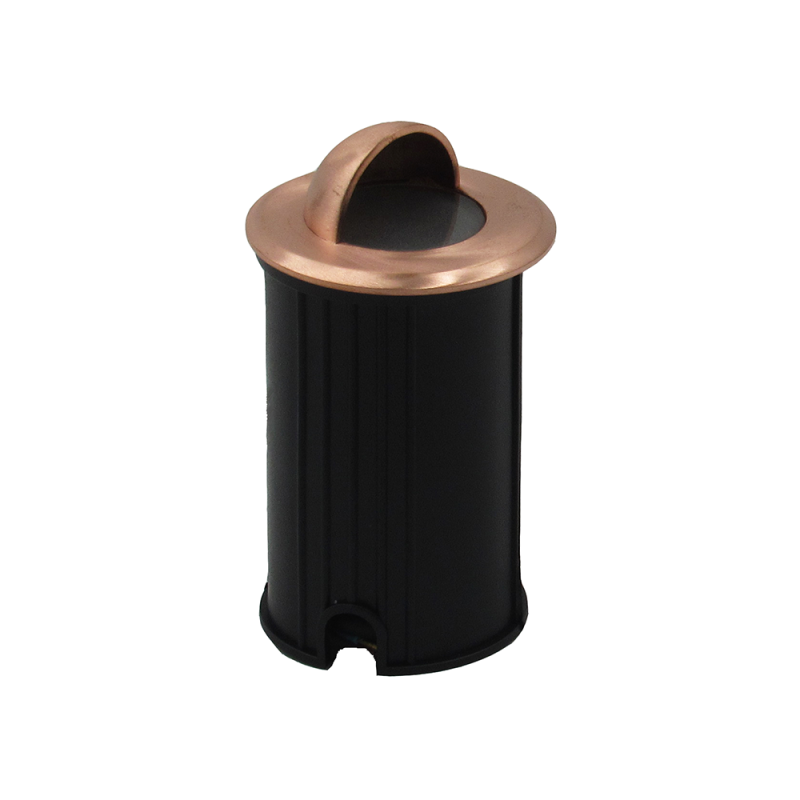
Step and path lighting
Provides subtle guidance along walkways, improving safety and ease of movement.

Acima 74912

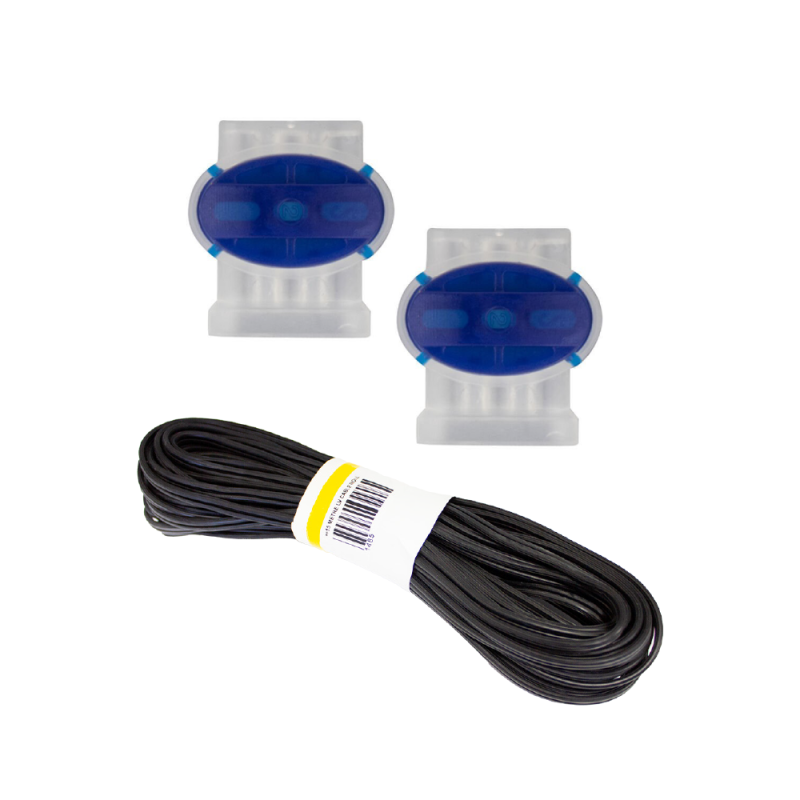
Essential components
Cables, connectors, and transformers are key to creating a reliable, weather-resistant system.

Cable 1485

Your local Lightingplus showroom

Designing outdoor lighting can feel more complex than expected, but the right advice makes it simple.

Our team can help you create a lighting plan that suits your home, your outdoor spaces, and the way you live.

Visit your local Lightingplus showroom to explore the range in person, or browse online anytime.